Topographical Surveys Walkthrough: A Comprehensive Guide for Accurate Site Planning in 2026
Understanding Topographical Surveys
Topographical surveys are essential tools in various sectors, serving as the foundation for construction, land development, and infrastructure planning. These surveys create detailed, scale-based maps that capture both natural and man-made features of a specific parcel of land. In doing so, they equip architects, engineers, and planners with critical data necessary to make informed decisions regarding design, safety, and compliance. When exploring options, Topographical surveys provide comprehensive insights into the land’s topography and facilitate effective project execution.
What is a Topographical Survey?
A topographical survey—often referred to as a land survey, topo survey, or terrain survey—methodically records the natural and man-made features of a landscape. This includes elements such as hills, valleys, water bodies, buildings, and existing infrastructure. The resulting map is invaluable for those involved in planning and executing building projects, as it provides a precise layout of the land’s contours, elevations, and other essential characteristics.
Key Features of Topographical Surveys
- Detail Orientation: Capturing minute details about the landscape including trees, fences, and utility lines.
- Elevation Levels: Recording the height above sea level and identifying slopes and depressions.
- Contour Lines: Depicting varying elevations through contour lines, helping to visualize the topography.
- 3D Modelling: Enabling the creation of three-dimensional representations of the surveyed land.
Common Terms Used in Topographical Surveys
Understanding terminology associated with topographical surveys is crucial for effective communication among stakeholders. Here are some common terms:
- Elevation: The height of a point on the ground relative to sea level.
- Contour Lines: Lines connecting points of equal elevation on a map.
- Datum: A reference point or surface used to measure elevations.
- Bench Mark: A fixed reference point for measuring elevation.
Importance of Topographical Surveys for Projects
Topographical surveys play a vital role in the success of various projects by providing critical data that influences planning, design, and resource allocation. Their importance spans several dimensions of project management and development.
Why Do You Need a Topographical Survey?
Engaging in a construction or land development project without the insights from a topographical survey can lead to severe pitfalls. Here are several reasons why these surveys are indispensable:
- Accurate Planning and Design: They offer architects and engineers precise site data necessary to design structures that align with the terrain and account for natural features.
- Identify Constraints and Hazards: By revealing elevation changes and potential hazards, such as flood zones, topographical surveys aid in risk management and site safety.
- Support for Planning Applications: Local authorities often require topographical surveys as part of planning approvals to ensure developments comply with regulations.
- Prevent Costly Errors: Ensuring reliable data from the outset mitigates the risk of reworks and costly structural issues.
- Property Boundary Clarity: When paired with boundary surveys, they help clarify ownership lines and resolve disputes.
Who Benefits from Topographical Surveys?
Various stakeholders benefit significantly from the insights provided by topographical surveys:
- Architects: They require detailed terrain data to create designs that are both functional and aesthetic.
- Engineers: Structural, civil, and environmental engineers depend on accurate surveys to ensure safety and feasibility.
- Developers: Providing a competitive edge, these surveys help developers assess project viability and compliance with local regulations.
- Local Authorities: They use survey data to make informed decisions regarding planning and zoning.
How Topographical Surveys Prevent Costly Errors
By offering a comprehensive overview of land features, topographical surveys can significantly reduce risks associated with construction projects. Ignoring this vital step may result in unexpected complications, leading to delays and increased costs. For instance, without a thorough analysis of site elevation, construction could inadvertently lead to drainage issues, which may necessitate extensive remedial work later on.
Topographical Surveying Equipment
The accuracy of topographical surveys greatly depends on the sophisticated equipment used by surveyors. The following sections outline the high-tech tools essential for conducting these surveys in the UK.
High-Tech Tools Used in the UK
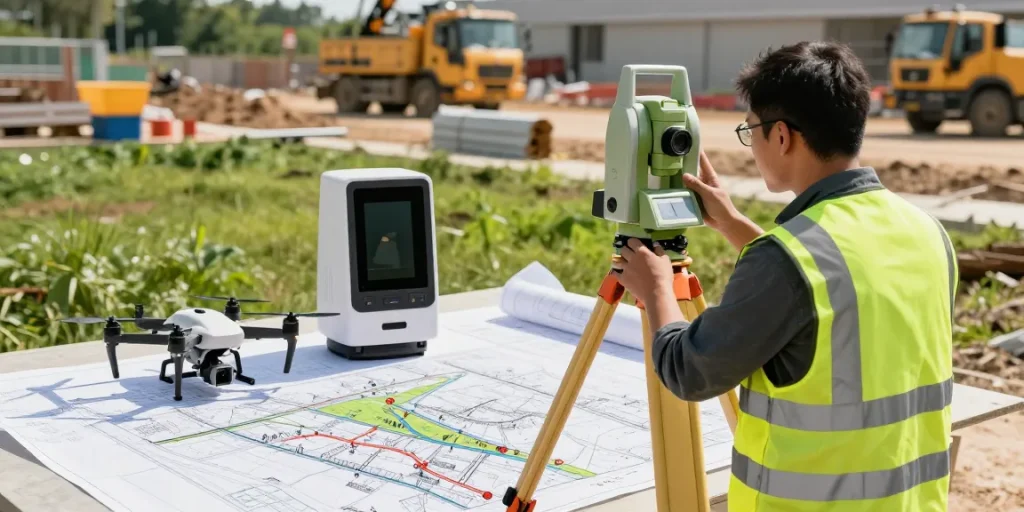
- Total Station Instruments: Combining theodolite and electronic distance measurement (EDM) technology, these instruments are essential for precise angle and distance measurements.
- GPS Surveying Equipment (GNSS): Offering rapid and accurate point positioning, particularly beneficial on expansive or rural sites.
- 3D Laser Scanners (LiDAR): Capturing millions of data points per second, ideal for detailed three-dimensional modelling of various terrains.
- UAVs (Drone Surveys): Equipped with high-resolution cameras, drones can efficiently cover challenging terrains and produce detailed maps.
- Digital Level Instruments: Used for precise measurements of vertical height, often in combination with spot height surveys.
How Equipment Affects Survey Accuracy
The choice of surveying equipment directly impacts the quality of data produced. High-quality instruments reduce human error and increase measurement precision, leading to better project outcomes. For example, 3D laser scanning allows surveyors to capture intricate details of complex landscapes that traditional techniques might overlook. Each type of equipment serves a unique purpose, and the combination of tools ensures comprehensive data collection tailored to the specific project requirements.
Innovations in Surveying Technologies for 2026
Technological advancements continue to reshape the landscape of topographical surveys. Emerging trends include:
- Enhanced Drone Capabilities: Future UAVs are expected to incorporate advanced imaging techniques and AI for real-time data processing.
- Integration of IoT Devices: Internet of Things (IoT) devices may facilitate continuous data collection and monitoring, enhancing long-term project management.
- Augmented Reality (AR) Applications: AR can provide visual overlays, enabling stakeholders to understand land features and project designs better.
Cost and Pricing of Topographical Surveys
Understanding the costs associated with topographical surveys is critical for effective budgeting and planning. The following sections delve into the factors that influence survey pricing and provide insights into typical costs for various types of topographical surveys.
Factors Influencing Topographical Survey Pricing
Several factors affect the pricing of topographical surveys in the UK:
- Site Size: Larger sites generally incur higher costs due to the increased time and resources required for surveying.
- Complexity of the Site: Complex terrains with significant elevation changes or obstacles may require more advanced equipment and technical expertise.
- Location: Costs can vary by region, with urban areas typically commanding higher fees due to accessibility challenges.
- Type of Survey: Specialty surveys, such as those requiring detailed 3D modelling, may carry premium pricing.
Typical Costs for Different Survey Types
The cost of topographical surveys can vary widely based on the specific requirements:
- Small Residential Plots: Usually range from £450 to £750.
- Medium-Sized Development Sites: Costs can rise to between £1,000 and £1,500.
- Large Commercial or Infrastructure Projects: These often start at £1,500 and can exceed £5,000, depending on the project’s scope and complexity.
Getting Competitive Quotes for Your Survey Needs
To ensure you receive value for your investment, obtaining multiple quotes is advisable. Many surveying firms provide free online estimates based on site details, allowing you to compare services and pricing without obligation.
Future Trends in Topographical Surveys
The landscape of topographical surveying is continually evolving, influenced by advancements in technology and changing environmental considerations. The following sections explore emerging trends that are shaping the future of the industry.
Emerging Technologies Shaping the Surveying Industry
As surveying technology progresses, professionals can expect to see:
- Increased Use of AI: Artificial Intelligence will enhance data analysis and decision-making, allowing for faster processing of survey results.
- Automation of Surveying Processes: Automation can reduce the need for manual data collection and improve efficiency.
- Integration of BIM: Building Information Modelling will facilitate a more collaborative approach to planning and design.
Sustainability Considerations in Topographical Surveys
With growing awareness of environmental issues, sustainability is becoming increasingly pivotal in topographical surveys. Practices such as:
- Minimizing Carbon Footprint: Using energy-efficient equipment and practices can significantly reduce environmental impact.
- Promoting Green Building Solutions: Survey data that incorporates sustainability metrics can support eco-friendly construction practices.
Preparing for the Future of Land Surveys in 2026
In preparation for the future, it’s essential to stay informed about evolving technologies, regulations, and market trends. Active engagement in professional development and adaptation to changing industry standards will position surveyors for success in the coming years.